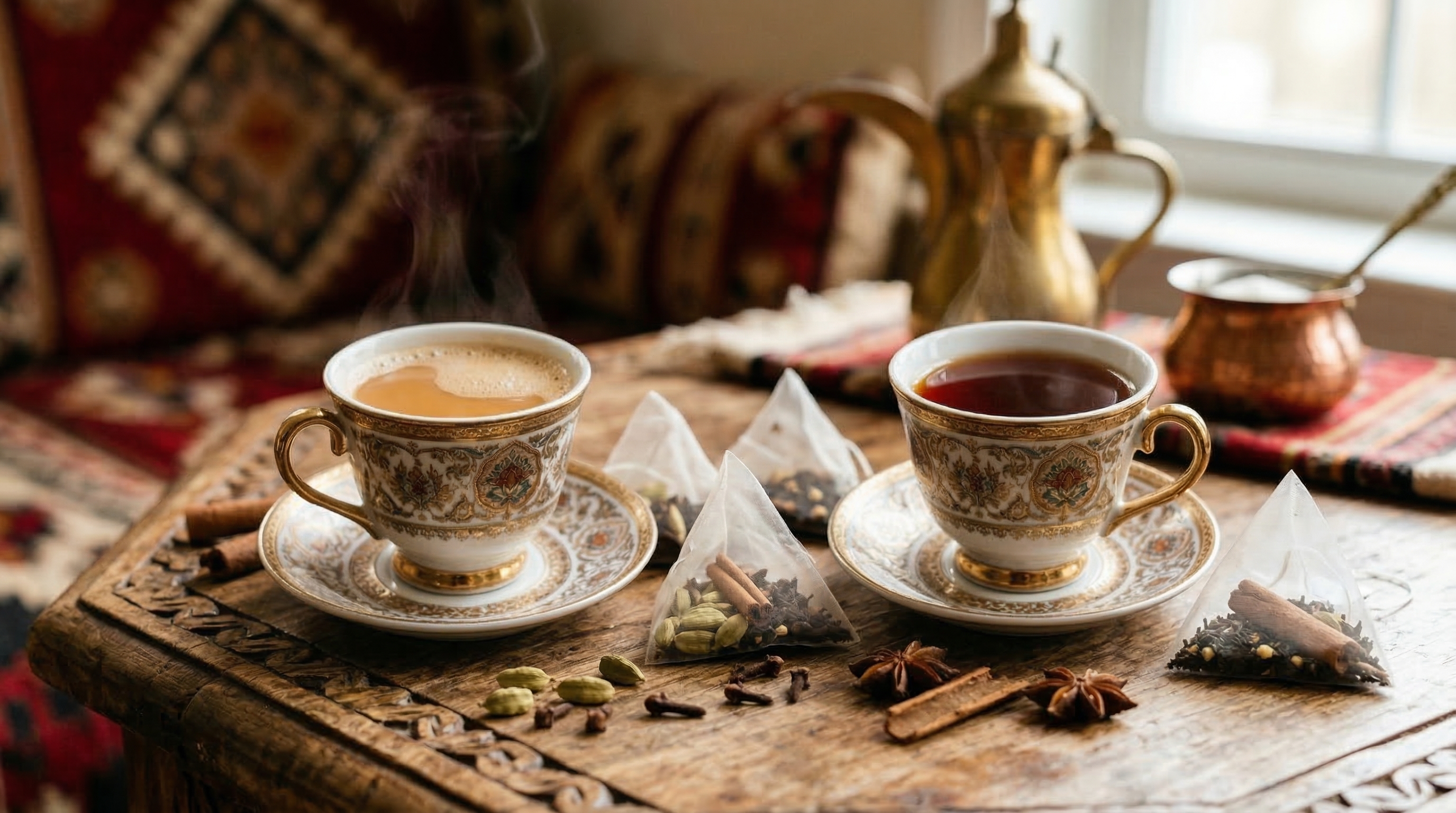
Yemen gave the world coffee. Then centuries later, when black tea arrived by trade ships into the port of Aden. The Yemeni people did what they had always done, they took something from afar and made it their own.
From Trade Route to Teacup
Yemen never grew tea. It didn’t need to.
For centuries, the port of Aden was one of the most important trade crossings in the world. A place where goods, ideas, and cultures passed through on their way somewhere else. When black tea arrived on merchant ships from East Africa and South Asia, it wasn’t new to Yemen. It was just next
Because Yemen already had everything else.
The cardamom. The cloves. The cinnamon. These weren’t exotic imports, they were pantry staples woven into Yemeni cooking, medicine, and daily practice for generations. So when tea showed up, Yemenis didn’t drink it plain. They did what they had always done, they made it theirs!
The Spice Blend That Defines Yemeni Tea
What sets Yemeni tea apart isn’t just the leaf, it’s the blend. A proper cup combines premium black tea with whole cardamom pods, cloves, and cinnamon sticks. Each spice plays a specific role:
- Cardamom adds a floral, slightly sweet warmth
- Cloves bring depth and a subtle heat
- Cinnamon provides the aromatic finish that lingers
The spices aren’t ground and sprinkled in. They’re whole, simmered slowly, releasing their oils gradually into the brew.
There is no shortcut that works. Believe me, people have tried.
More Than a Drink
In Yemeni homes, tea is the first thing offered to a guest. Always. Before conversation, before anything.
It’s brewed slowly, served in small glasses, and accompanied by conversation. The act of preparing and sharing tea is an expression of hospitality. It’s a way of saying “you matter.”
In Yemen, tea is never rushed. It steeps slowly, the way the best conversations do.
And somewhere in that slowness, something happens. People open up. Time softens. That’s not an accident, it’s the whole point. Warda exists to carry that feeling forward. Every tea bag we blend is an invitation to stop, brew properly, and share it with someone worth sharing it with.
Brewing It Right
If you want to experience Yemeni tea the traditional way and get perfect tea, every time:
Warda Red Tea
In three simple steps.
- Boil a cup of water.
- Drop in a Warda Red tea bag and let it sit for 2–3 minutes.
- Remove the tea bag, sweeten with sugar if you like, and enjoy.
The spices are already in the bag, so all you need is a little patience.
Serve with dates or something sweet for the full experience
Warda Adeni Tea
- Combine about 1.5 cups of whole milk and 0.5 cup of water in a small pot (roughly a 3:1 ratio). You’re starting with more liquid than you think you’ll need because a good amount will cook off as it simmers.
- Bring it to a gentle boil over medium heat, watching carefully so the milk doesn’t overflow.
- Drop in a Warda Adeni tea bag, reduce the heat to low, and let it simmer for 5–8 minutes, stirring occasionally.
- Remove the tea bag, pour into a glass, and sweeten with sugar if you like.
Serve with dates or something sweet for the full experience
The key is patience. Let the spices open up. Let the tea darken. The reward is a cup with layers of flavour that no other tea bag can replicate.
The Future of Yemeni Tea
The thing that makes Yemeni tea special is the same thing that makes it hard to scale. The whole spices. The slow process. The refusal to cut corners. Every brand that’s tried to mass produce it has lost something along the way.
We’re not interested in that trade off, but we are also not interested in making it complicated.
We did the hard part so you don’t have to. Sourcing the tea, balancing the spices, getting the blend right. All you need is a tea bag, hot water, and a few minutes of your time.
Perfect tea, every time. One tea bag at a time.